
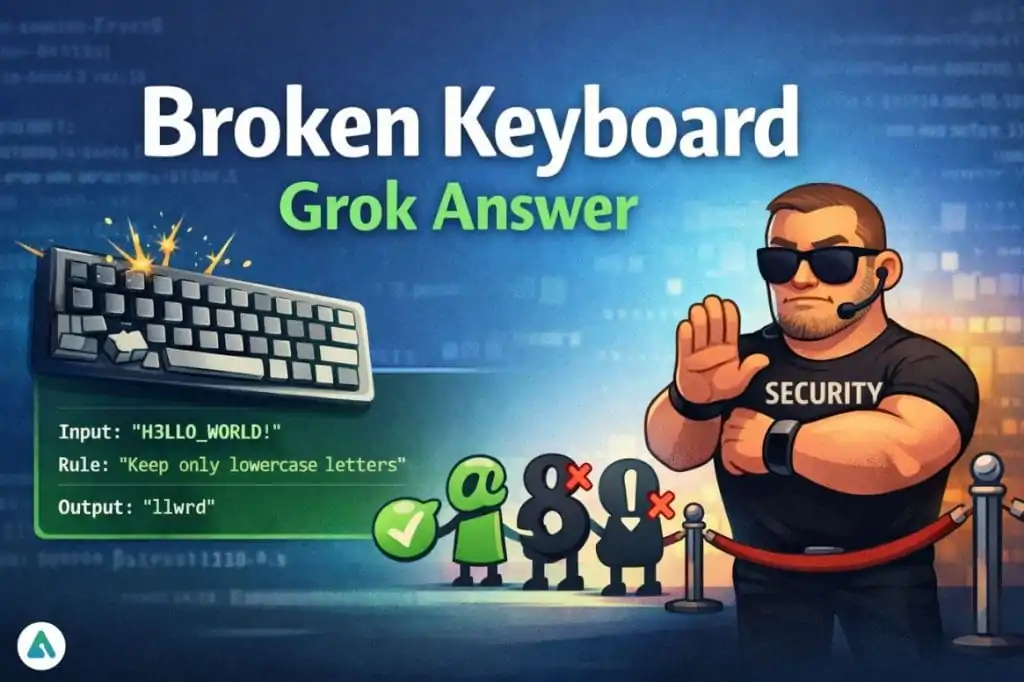
The internet constantly creates new phrases, memes, and trends that capture the attention of millions of users. One such term that has recently gained popularity is “Broken Keyboard Grok Answer.” While the phrase may sound unusual at first, it has become a topic of discussion among social media users, technology enthusiasts, and people interested in artificial intelligence.
The phrase combines two distinct ideas: a broken keyboard, which symbolizes typing errors or random text, and Grok, an AI chatbot developed by xAI. Together, these elements create a unique online phenomenon where users intentionally type gibberish or nonsensical text and then ask Grok to interpret, explain, or respond to it.
This article explores the meaning of the Broken Keyboard Grok Answer trend, its origins, how it works, why it became popular, and what it reveals about AI technology and internet culture.
What Is a Broken Keyboard Grok Answer?
A Broken Keyboard Grok Answer refers to a situation where someone enters random characters, letters, or symbols—similar to what might appear if a keyboard were malfunctioning—and asks Grok AI to interpret the message.
For example, a user might type:
asdfghjklqwertyuiopzxcmnbor
jdkslajf9823!!@@#kdkdand then ask:
“Grok, what does this mean?”
Instead of simply saying the text is meaningless, the AI often generates a humorous, imaginative, or surprisingly detailed interpretation. These responses are what people call “Broken Keyboard Grok Answers.”
Understanding Grok AI
Before exploring the trend further, it is important to understand Grok itself.
Grok is an artificial intelligence chatbot created by xAI, a company founded by Elon Musk. The chatbot is designed to answer questions, generate content, and engage in conversations with users.
Unlike many traditional AI assistants, Grok is known for:
- A conversational personality
- Humorous responses
- Creative interpretations
- Informal communication style
- Ability to understand internet culture
These characteristics make Grok particularly suitable for meme-based interactions and playful online trends.
The Origin of the Broken Keyboard Trend
The Broken Keyboard Grok Answer trend emerged from social media platforms where users began testing AI models with unusual inputs.
People noticed that AI chatbots often attempted to find meaning even in completely random text. Curious users started posting keyboard smashes such as:
ahsjdjdkslallskdor
qwertyuiopasdfghjkland sharing the AI-generated responses.
The more creative and funny the interpretation, the more attention the post received. Over time, these interactions evolved into a viral trend known as the Broken Keyboard Grok Answer phenomenon.
Why People Find It Funny
The popularity of Broken Keyboard Grok Answers comes from the contrast between meaningless input and meaningful output.
A random string like:
sjdjskdkdkdkdcontains no actual message.
However, Grok might respond with something like:
“This appears to be the sound of someone desperately trying to finish a project five minutes before the deadline.”
The humor comes from:
Unexpected Creativity
People are surprised when AI creates elaborate interpretations from nonsense.
Relatability
Many responses connect random text to common human experiences.
Absurdity
The fact that a meaningless keyboard smash can produce a thoughtful explanation creates a comedic effect.
Internet Meme Culture
Modern internet culture embraces randomness, making these interactions highly shareable.
How Grok Interprets Random Text
Many users wonder how Grok can respond to text that has no actual meaning.
The answer lies in the way large language models work.
AI systems are trained on massive datasets containing:
- Books
- Websites
- Articles
- Social media content
- Online conversations
When Grok receives random text, it looks for patterns and context clues. If no real meaning exists, it often generates a creative interpretation rather than simply rejecting the input.
For instance:
Input:
aaaaaaahhhhhhhPossible Grok response:
“This looks like either excitement, panic, or someone discovering their favorite snack is back in stock.”
The AI isn’t decoding a hidden message. Instead, it is generating a plausible and entertaining response.
Examples of Broken Keyboard Grok Answers
Here are some fictional examples illustrating the trend.
Example 1
Input:
jskdkdkdkdGrok-style answer:
“The universal language of frustration when the Wi-Fi disconnects during an important meeting.”
Example 2
Input:
qwertyuiopGrok-style answer:
“A person attempting to sound productive while secretly having no idea what they are doing.”
Example 3
Input:
zxczxczxcGrok-style answer:
“An ancient keyboard spell used to summon technical support.”
Example 4
Input:
kkkkkkkkkkGrok-style answer:
“The laughter of someone who just remembered an embarrassing moment from ten years ago.”
These imaginative responses are what make the trend entertaining.

Social Media and Viral Growth
Social media played a major role in spreading the Broken Keyboard Grok Answer trend.
Users began sharing screenshots showing:
- Random keyboard smashes
- Grok’s responses
- Funny interpretations
- AI-generated explanations
Platforms such as:
- X (formerly Twitter)
- TikTok
helped popularize the trend.
The format is simple, easy to understand, and often generates laughs within seconds, making it ideal for social sharing.
Why AI Tries to Find Meaning Everywhere
One reason Broken Keyboard Grok Answers are fascinating is that they reveal how AI systems operate.
Humans can easily recognize meaningless text. AI, however, is designed to:
- Analyze patterns
- Predict likely responses
- Continue conversations
- Provide useful output
As a result, AI often attempts to create meaning even when none exists.
This behavior demonstrates both the strengths and limitations of language models.
Strength
The AI remains conversational and engaging.
Limitation
The AI may occasionally infer meaning where there is none.
This characteristic contributes to both the humor and educational value of the trend.
Psychological Appeal of the Trend
The Broken Keyboard Grok Answer phenomenon also has psychological appeal.
Curiosity
People want to know what AI will say next.
Surprise
Unexpected responses trigger amusement.
Creativity
Users enjoy seeing imaginative interpretations.
Participation
Anyone can join by typing random characters.
Because the barrier to entry is so low, the trend continues to attract participants from around the world.
Memes and Internet Humor
The trend fits perfectly into modern meme culture.
Internet humor often embraces:
- Randomness
- Absurdity
- Unexpected outcomes
- Creative reinterpretations
Broken Keyboard Grok Answers combine all four elements.
A completely random string of letters becomes the foundation for a humorous narrative, creating an ideal meme format.
Educational Value
Although the trend is primarily entertaining, it also teaches users about artificial intelligence.
People learn that AI:
- Predicts language patterns
- Generates responses based on probabilities
- Does not truly understand text like humans do
- Can produce convincing interpretations from limited information
By experimenting with random inputs, users gain insight into how AI systems function.
Criticism of the Trend
Despite its popularity, some critics argue that the trend can create misconceptions about AI.
Common concerns include:
Overestimating AI Intelligence
Some users may assume the AI genuinely understands hidden meanings.
Encouraging Misinformation
AI-generated interpretations can appear authoritative even when based on nonsense.
Lack of Accuracy
Random text has no real meaning, so any explanation is essentially speculative.
These criticisms highlight the importance of understanding AI limitations.
The Role of Creativity in AI Responses
One reason Grok excels at this trend is its creative response style.
Rather than replying:
“This text has no meaning.”
Grok often provides:
- Jokes
- Stories
- Emotional interpretations
- Fictional explanations
This makes interactions more entertaining and memorable.
Creative responses help transform meaningless text into engaging content.
What the Trend Says About Human Behavior
The Broken Keyboard Grok Answer trend reveals several interesting aspects of human behavior.
People Enjoy Testing Boundaries
Users love discovering what AI can and cannot do.
Humor Comes from Unexpected Results
Random input leading to thoughtful output creates comedic value.
Curiosity Drives Engagement
People continue experimenting because every response is different.
Technology Becomes Entertainment
AI is increasingly used not only for productivity but also for fun.
Future of Similar AI Trends
As AI technology evolves, similar trends are likely to emerge.
Future possibilities include:
- AI interpreting doodles
- AI explaining random sounds
- AI analyzing nonsense phrases
- AI creating stories from accidental text
The growing popularity of generative AI means creative interactions will continue expanding.
Tips for Creating Funny Broken Keyboard Grok Prompts
If you want entertaining responses, consider:
Use Random Characters
Example:
jdjskdkskdkAdd Context
Ask:
“Explain this as if it were an ancient prophecy.”
Request Different Styles
Try:
“Interpret this as a movie review.”
or
“Translate this into workplace language.”
Experiment
The more unusual the prompt, the more interesting the response may be.
Conclusion
The Broken Keyboard Grok Answer trend is a fascinating blend of artificial intelligence, internet humor, and human creativity. What begins as a meaningless collection of letters often becomes a surprisingly entertaining story, joke, or interpretation thanks to Grok’s conversational capabilities.
The trend highlights both the strengths and limitations of modern AI. While Grok does not truly decode hidden meanings from random text, its ability to generate creative and engaging responses demonstrates the remarkable flexibility of language models.
As AI continues to evolve, trends like Broken Keyboard Grok Answers will likely remain popular because they showcase the playful side of technology. They remind us that artificial intelligence is not only a tool for productivity and information but also a source of entertainment, curiosity, and creative experimentation in the digital age.
