


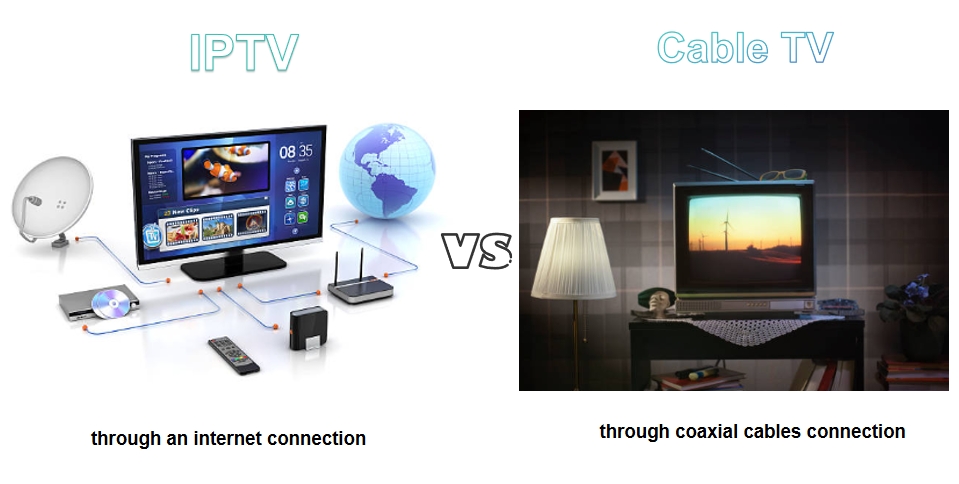
The way people watch television has changed dramatically over the past two decades. Traditional cable television, once the dominant form of home entertainment, now competes with newer technologies such as Internet Protocol Television (IPTV). As internet speeds continue to improve and consumers demand more flexibility, IPTV has emerged as a popular alternative to cable TV.
Many households today face an important question: Should they stick with cable TV or switch to IPTV? Both services provide access to television channels, movies, sports, and entertainment content, but they operate in very different ways. Understanding these differences can help consumers make informed decisions based on their needs, budget, and viewing preferences.
This article provides a comprehensive comparison of IPTV and Cable TV, covering their technology, features, advantages, disadvantages, costs, and future prospects.
What Is IPTV?
IPTV, or Internet Protocol Television, is a technology that delivers television content through internet connections rather than traditional cable or satellite networks. Instead of receiving television signals through coaxial cables, IPTV streams content using broadband internet.
Users can watch IPTV content on various devices, including:
- Smart TVs
- Smartphones
- Tablets
- Laptops
- Desktop computers
- Streaming devices
IPTV services often provide live TV channels, video-on-demand (VOD), catch-up TV, and interactive features.
Types of IPTV Services
Live Television
This works similarly to traditional TV broadcasting, allowing viewers to watch programs in real time.
Video on Demand (VOD)
Users can select movies, TV shows, and other content whenever they want.
Time-Shifted TV
This feature allows viewers to watch previously aired programs without recording them.
Catch-Up TV
Viewers can access recently broadcast content for a limited period.
What Is Cable TV?
Cable TV is a traditional television distribution system that delivers channels through coaxial cables connected to homes and businesses. Cable providers receive broadcast signals and distribute them to subscribers through a dedicated network infrastructure.
Cable TV has been one of the most reliable television services for decades and remains popular in many regions around the world.
How Cable TV Works
Cable providers transmit television signals through a network of physical cables. Subscribers connect their television sets using a cable box or built-in tuner that receives and decodes the channels.
Unlike IPTV, cable TV does not rely heavily on internet connectivity for standard viewing.
How IPTV and Cable TV Differ
Although both services provide television programming, their delivery methods are entirely different.
| Feature | IPTV | Cable TV |
|---|---|---|
| Delivery Method | Internet Connection | Coaxial Cable |
| Device Compatibility | Multiple Devices | Primarily Television |
| On-Demand Content | Extensive | Limited |
| Mobility | High | Low |
| Installation | Easy | Professional Setup Often Required |
| Interactive Features | Advanced | Limited |
| Internet Requirement | Essential | Not Required |
| Viewing Flexibility | High | Moderate |
Advantages of IPTV
1. Greater Flexibility
One of IPTV’s biggest advantages is flexibility. Users can watch content anytime and anywhere with an internet connection.
Whether traveling, commuting, or relaxing at home, IPTV allows access to favorite programs across multiple devices.
Benefits Include
- Mobile viewing
- Cross-device compatibility
- Remote access
- Personalized experiences
2. Large Content Libraries
Most IPTV services offer vast libraries of movies, TV shows, documentaries, and sports content.
Unlike cable TV schedules, IPTV allows users to watch content whenever they choose.
Popular Content Categories
- Movies
- TV Series
- Sports
- Children’s Programs
- News Channels
- Educational Content
3. Video on Demand Features
IPTV excels in video-on-demand functionality.
Users no longer need to wait for specific broadcast times. Instead, they can select content instantly.
This feature significantly enhances user convenience.
4. Multi-Device Support
IPTV can work on:
- Smart TVs
- Android Devices
- iPhones
- Tablets
- Computers
- Streaming Boxes
This flexibility makes IPTV attractive for modern households.
5. Interactive Features
Many IPTV providers include advanced interactive functions such as:
- Pause and rewind live TV
- Catch-up television
- Personalized recommendations
- Search functionality
- Recording options
These features improve the overall viewing experience.
6. Cost Efficiency
In many cases, IPTV subscriptions are less expensive than traditional cable packages.
Users can often choose customized plans instead of paying for large channel bundles they rarely watch.
Disadvantages of IPTV
1. Dependence on Internet Quality
IPTV performance depends heavily on internet speed and stability.
Poor internet connections may cause:
- Buffering
- Freezing
- Lagging
- Reduced video quality
A high-speed broadband connection is usually required for optimal viewing.
2. Network Congestion
During peak usage hours, internet congestion can affect streaming quality.
Heavy household internet usage may also impact IPTV performance.
3. Security Concerns
Not all IPTV providers operate legally.
Users should ensure they subscribe to licensed and legitimate IPTV services to avoid legal and security risks.
4. Potential Service Interruptions
Internet outages can immediately affect IPTV access.
Without internet connectivity, television service becomes unavailable.
Advantages of Cable TV
1. Reliable Signal Quality
Cable TV is known for its consistent signal delivery.
Because it uses dedicated cable infrastructure, viewers generally experience fewer interruptions than internet-based services.
2. Stable Live Broadcasting
Cable TV performs exceptionally well for:
- Live sports
- Breaking news
- Real-time events
Viewers often experience less latency than some streaming platforms.
3. Simple User Experience
Many users appreciate cable TV’s straightforward operation.
Simply turning on the television provides immediate access to channels without requiring internet configuration.
4. Less Dependence on Internet
Unlike IPTV, cable TV remains functional during internet outages.
This reliability can be valuable in areas with inconsistent internet service.
5. Professional Support
Cable providers typically offer:
- Installation services
- Technical support
- Equipment maintenance
- Customer assistance
These services can be helpful for less tech-savvy users.
Disadvantages of Cable TV
1. Higher Costs
Cable TV packages are often more expensive than IPTV subscriptions.
Additional charges may include:
- Equipment rental fees
- Installation costs
- Premium channel packages
- Service fees
2. Limited Viewing Flexibility
Cable TV is generally designed for home television viewing.
Watching content outside the home can be difficult compared to IPTV.
3. Channel Bundling
Many cable providers require customers to purchase large channel packages.
As a result, subscribers often pay for channels they never watch.
4. Fewer Interactive Features
Traditional cable systems generally offer fewer advanced features compared to IPTV platforms.
Modern viewers increasingly expect functionalities such as:
- On-demand content
- Personalized recommendations
- Cross-device viewing
5. Limited Content Control
Cable TV follows scheduled programming.
Viewers must often adapt to broadcaster schedules rather than watching content whenever they choose.
Picture Quality Comparison
IPTV Picture Quality
IPTV providers can deliver:
- HD Content
- Full HD Content
- 4K Ultra HD Streams
Quality depends largely on internet bandwidth.
A strong connection enables excellent visual performance.
Cable TV Picture Quality
Cable TV also supports:
- HD Channels
- Full HD Broadcasting
- Some 4K Services
However, picture quality may vary depending on network infrastructure and compression methods.
IPTV vs. Cable TV Cost Comparison
Cost remains one of the biggest deciding factors for consumers.
IPTV Costs
Typical expenses include:
- Subscription fees
- Internet service
- Streaming device (optional)
Many IPTV services offer affordable monthly plans.
Cable TV Costs
Typical expenses include:
- Monthly subscription fees
- Installation charges
- Equipment rental
- Premium channel fees
Over time, cable TV often becomes more expensive.
Sports and Live Event Coverage
IPTV for Sports
Many IPTV platforms provide access to:
- Football
- Cricket
- Basketball
- Tennis
- International Sports Networks
Some services also offer replay and catch-up options.
Cable TV for Sports
Cable TV remains strong in live sports broadcasting.
Many viewers prefer cable because of its stable performance during major sporting events.
Which Is Better for Families?
The answer depends on household preferences.
IPTV Is Better For
- Tech-savvy families
- On-demand viewing
- Multiple devices
- Flexible entertainment
- Budget-conscious users
Cable TV Is Better For
- Traditional television viewers
- Reliable live broadcasts
- Households with weak internet
- Users preferring simple setups
Future of IPTV and Cable TV
The television industry is increasingly moving toward internet-based delivery systems.
Several trends support IPTV growth:
- Faster broadband speeds
- Expansion of fiber internet
- Smart TV adoption
- Mobile content consumption
- Cloud-based services
Meanwhile, cable providers are adapting by integrating streaming features and internet-based services into their offerings.
Experts predict IPTV will continue gaining market share as consumers demand greater flexibility and personalized entertainment experiences.
IPTV vs. Cable TV: Key Factors to Consider
Before choosing between IPTV and Cable TV, consider:
Internet Availability
Reliable high-speed internet favors IPTV.
Budget
IPTV generally offers more affordable plans.
Viewing Habits
On-demand viewers may prefer IPTV.
Reliability Needs
Cable TV offers dependable service during internet issues.
Device Usage
IPTV provides better support for multiple devices.
Conclusion
The debate between IPTV and Cable TV ultimately comes down to individual needs and preferences. IPTV represents the future of television, offering flexibility, on-demand content, multi-device compatibility, and often lower costs. It is ideal for modern consumers who value convenience and personalized viewing experiences.
Cable TV, on the other hand, remains a dependable option for viewers who prioritize reliability, live broadcasts, and straightforward television access without depending on internet connectivity.
As internet technology continues to evolve, IPTV is expected to become increasingly dominant in the entertainment industry. However, cable TV still maintains a loyal user base and continues to provide consistent performance for millions of households worldwide.
When choosing between IPTV and Cable TV, carefully evaluate your internet quality, viewing habits, budget, and entertainment priorities to select the service that best fits your lifestyle.
