


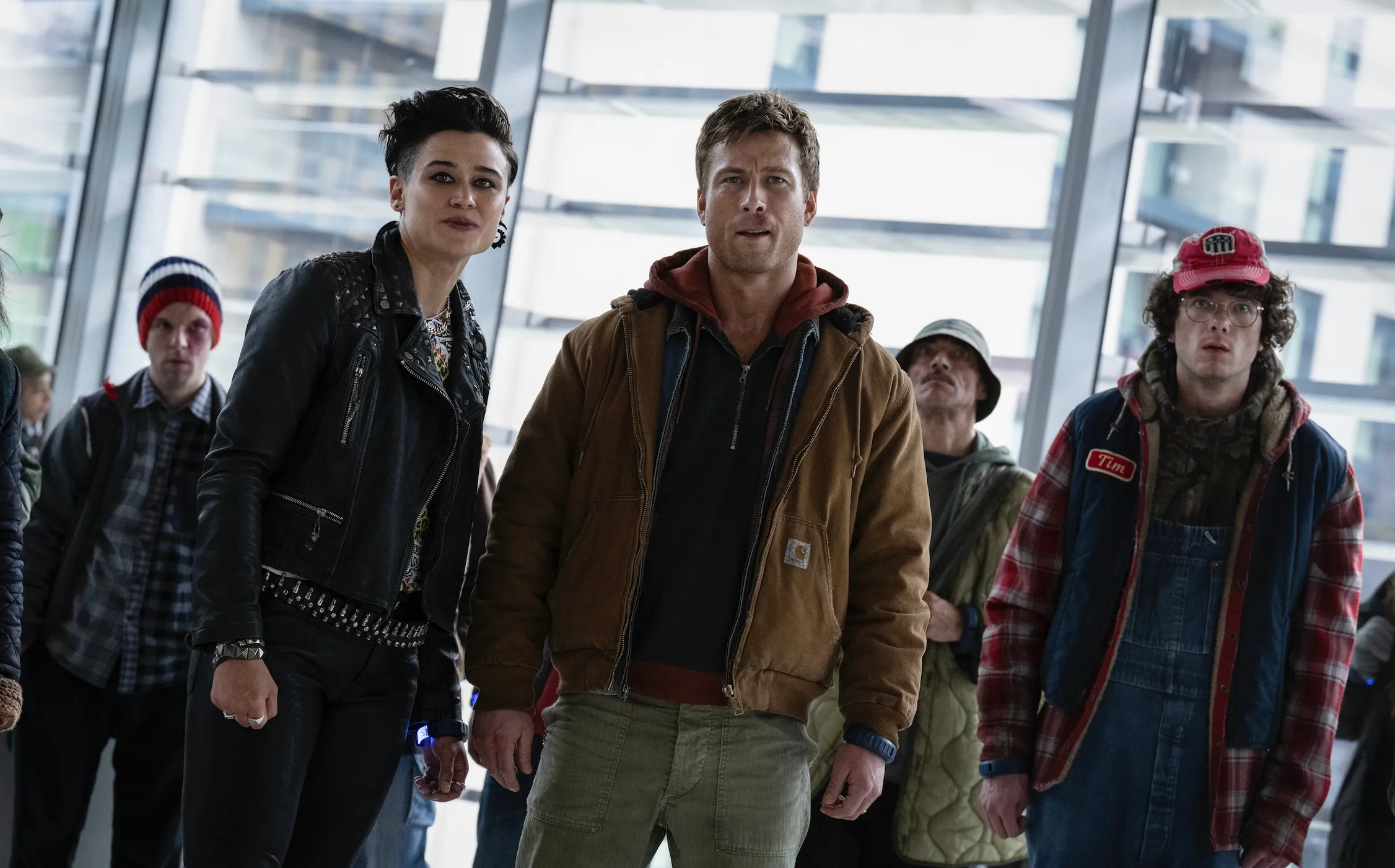
The Running Man (2025) is one of the most talked-about action movies of the year. Directed by Edgar Wright and starring Glen Powell, the film reimagines Stephen King’s dystopian novel with a modern perspective. While many moviegoers remember the 1987 adaptation starring Arnold Schwarzenegger, the 2025 version takes a different approach by staying closer to the original novel while introducing contemporary themes about media, surveillance, and entertainment.
Since its release, critics and audiences have shared mixed-to-positive reactions. Some praise the movie’s energetic pacing, stylish direction, and strong performances, while others believe it plays things too safely despite its fascinating premise.
This article provides a detailed review of The Running Man (2025), including its story, cast, performances, action sequences, direction, themes, audience reactions, and whether it’s worth watching.
What Is The Running Man (2025) About?
The story takes place in a near-future society where entertainment has evolved into something terrifying. The world’s most popular television program, The Running Man, is a deadly competition where contestants must survive while being hunted across the country.
Ben Richards, portrayed by Glen Powell, enters the deadly contest after becoming desperate to provide financial support for his sick daughter. As millions watch his every move on live television, Richards must outsmart professional hunters while exposing the corruption behind the game itself.
Unlike the 1987 film, which focused primarily on arena-style combat, the 2025 adaptation follows the novel more closely by making the entire world the playing field.
Cast and Characters
The movie features an impressive ensemble cast.
Glen Powell as Ben Richards
Glen Powell delivers one of the strongest performances of his career. Rather than portraying Richards as an unstoppable action hero, he plays him as an ordinary man forced into extraordinary circumstances.
His performance balances:
- Determination
- Vulnerability
- Humor
- Emotional depth
Many reviewers considered Powell one of the film’s biggest strengths.
Josh Brolin
Josh Brolin portrays the ruthless producer behind The Running Man television show. His performance captures the cold corporate mindset that values ratings over human lives.
Supporting Cast
The supporting cast adds personality throughout the movie, providing emotional moments as well as comic relief without distracting from the central narrative.
Edgar Wright’s Direction
Edgar Wright is known for stylish filmmaking and energetic editing.
His signature techniques include:
- Fast-paced editing
- Creative transitions
- Dynamic camera movement
- Clever visual storytelling
- Strong use of music
Many of these trademarks appear throughout The Running Man.
Unlike many modern action movies that rely heavily on CGI, Wright emphasizes practical stunt work and carefully choreographed action sequences.
Critics frequently praised the film’s momentum, noting that it rarely slows down.
Story and Screenplay
The screenplay explores more than survival.
It raises questions about:
- Reality television
- Media manipulation
- Government control
- Wealth inequality
- Public obsession with violence
These themes feel surprisingly relevant today.
Instead of simply watching explosions and fight scenes, viewers are encouraged to think about how entertainment affects society.
However, some critics argued the movie doesn’t fully explore these ideas as deeply as it could have.
Action Sequences
Action is naturally one of the movie’s biggest selling points.
Highlights include:
Large-Scale Chase Scenes
The chase sequences feel exciting because Richards constantly adapts rather than overpowering every opponent.
Practical Stunts
Many scenes rely on practical stunt work instead of excessive CGI.
Creative Hunter Battles
Each hunter presents a unique challenge, keeping the action varied throughout the movie.
Suspense
The film often builds tension before explosive action, making every confrontation feel earned.
Visual Effects
The visual effects are polished without overwhelming the storytelling.
Instead of trying to create an unrealistic futuristic world, the movie presents a believable near future.
Technology appears advanced but recognizable.
This grounded approach helps the story feel more believable.
Cinematography
The cinematography supports the film’s high energy.
Key strengths include:
- Wide city landscapes
- Fast-moving chase sequences
- Excellent nighttime photography
- Sharp color grading
- Dynamic framing
The camera movement keeps viewers immersed in Richards’ desperate escape.
Music and Soundtrack
Edgar Wright has always placed great importance on music.
The soundtrack enhances nearly every major sequence.
Fast-paced music increases tension during chases, while quieter emotional scenes allow audiences to connect with Richards as a father.
Sound design also deserves praise.
Every explosion, vehicle chase, and crowd reaction contributes to the immersive experience.
How Different Is It from the 1987 Movie?
Many fans naturally compare the remake with Arnold Schwarzenegger’s classic.
Here are the biggest differences.
| 1987 Film | 2025 Film |
|---|---|
| Campy action | More serious tone |
| Arena-based competition | Nationwide chase |
| Simple action story | More political themes |
| Arnold Schwarzenegger | Glen Powell |
| Heavy one-liners | Character-focused storytelling |
Rather than replacing the original, the new movie offers a different interpretation.
Faithfulness to Stephen King’s Novel
One of the biggest praises for the remake is that it follows Stephen King’s novel more closely.
Important similarities include:
- Wider world setting
- Media criticism
- Psychological pressure
- Constant pursuit
- Social commentary
Even Stephen King reportedly praised the adaptation for capturing the spirit of his novel more effectively than the 1987 version.
Critical Reviews
Professional critics have generally described the movie as entertaining, energetic, and well-directed, though opinions vary on how effectively it explores its social themes.
Common praise includes:
- Glen Powell’s performance
- Edgar Wright’s direction
- Fast pacing
- Exciting action
- Strong production values
Common criticisms include:
- Predictable plot
- Underdeveloped themes
- Safe storytelling
- Longer runtime than necessary
Overall, reviews lean positive, even if many critics stop short of calling it a masterpiece.
Audience Reactions
Audience reactions have been similarly mixed but generally favorable.
Many viewers appreciate:
- The emotional story
- Entertaining action
- Stylish filmmaking
- Glen Powell’s charisma
Others felt:
- The pacing slows in the middle.
- The ending could have been stronger.
- The social commentary lacks bite.
Online discussions show a broad range of opinions, with some fans calling it one of Edgar Wright’s best films and others preferring the 1987 adaptation.
Strengths of The Running Man (2025)
The movie succeeds in several areas.
Excellent Lead Performance
Glen Powell carries nearly every scene with confidence and emotional authenticity.
Stylish Direction
Edgar Wright’s energetic filmmaking keeps viewers engaged.
Strong Production Design
The futuristic setting feels realistic rather than exaggerated.
Entertaining Action
Action scenes remain creative throughout the film.
Relevant Themes
Media obsession and corporate greed make the story feel timely.
Weaknesses
Despite its strengths, the movie isn’t perfect.
Doesn’t Fully Explore Its Ideas
Some critics expected a deeper examination of its dystopian themes.
Predictable Story Beats
Experienced viewers may anticipate several major twists.
Long Runtime
A tighter edit might have improved the pacing.
Limited Character Development
Some supporting characters receive less attention than they deserve.
Themes Explored
The Running Man isn’t just an action film.
It examines several important issues.
Media Manipulation
Television transforms suffering into entertainment.
Corporate Power
Profit becomes more important than human life.
Wealth Inequality
The contest reflects a society where desperation is exploited.
Public Spectacle
The audience becomes complicit by treating violence as entertainment.
These themes help elevate the film beyond a typical action thriller.
Is It Better Than the Original?
The answer depends on personal preference.
Fans of the 1987 movie may miss:
- Arnold Schwarzenegger’s charisma
- Classic one-liners
- Over-the-top villains
Meanwhile, readers of Stephen King’s novel may appreciate:
- Greater faithfulness
- Darker tone
- Richer social commentary
Rather than replacing the original, the remake stands as a complementary adaptation.
Who Should Watch It?
You’ll likely enjoy The Running Man (2025) if you like:
- Dystopian thrillers
- Action movies with social commentary
- Edgar Wright’s directing style
- Glen Powell’s performances
- Stephen King adaptations
It may be less satisfying if you’re looking solely for nonstop action without political or emotional themes.
Final Verdict
The Running Man (2025) successfully modernizes Stephen King’s classic story for today’s audiences. Edgar Wright injects the film with his trademark energy, while Glen Powell delivers a compelling performance that balances action with emotional depth. The movie shines through its inventive chase sequences, polished visuals, and timely commentary on media culture and corporate exploitation.
Although it doesn’t fully capitalize on every idea and some viewers may find parts of the story predictable, it remains an engaging and thought-provoking action thriller. Whether you’re a fan of the original novel, the 1987 film, or simply enjoy intelligent sci-fi action, The Running Man (2025) offers enough excitement and substance to make it worth watching.
